The Rise of Location-Independent Work

Every day, most people wake up and head into some kind of physical office. Whether it’s a traditional office, construction site, classroom, etc., most people would dwell on the idea of working from the comfort of their home. Location-independent work makes it possible for individuals to do their jobs in any geographic area around the world.
As this trend lives on, the rise of location-independent work is evident. In fact, according to GCS’s Nomad report, around 69 countries now offer a dedicated visa for remote workers, a stark contrast to the handful of countries that offered such visas in 2020. Looking at the numbers alone, MBO Partners reports that 18.5 million people in the US identify as digital nomads, a figure up 153% since 2019, while telework rates across Europe have risen to nearly double the pre-pandemic level. What was once a niche lifestyle of being a digital nomad is now a worldwide phenomenon, and understanding the ins and outs of this lifestyle is worth it to join this trend.
What is Location-Independent Work?
Location-independent work means your job does not require being done in a specific location. Rather, it is a spectrum that contains different kinds of locations. One is standard remote work, where you work in the same city as your employer. The other end of it goes into full digital nomadism, where you work while traveling between countries, often traveling through many different places on the go.
A digital nomad in particular is someone who combines remote or independent work with a regular schedule of international travel. Not everyone who works remotely is classified as a digital nomad, but by definition, every digital nomad is a location-independent worker.
How Fast is Location-Independent Work Growing?
Overall, each country/region has distinct trends regarding location-independent work, so the overall picture emerges from comparing each economy.
In the EU, 9% of employed people usually worked from home in 2025, according to Eurostat. This is still higher than the pre-pandemic 6% figure. This number reflects a major structural shift in remote work. Even though it has settled since its 13.5% rate in 2021, the rate varies by country. Finland, for example, sits at 21.1%, while Romania sits at a minuscule 1.3%.
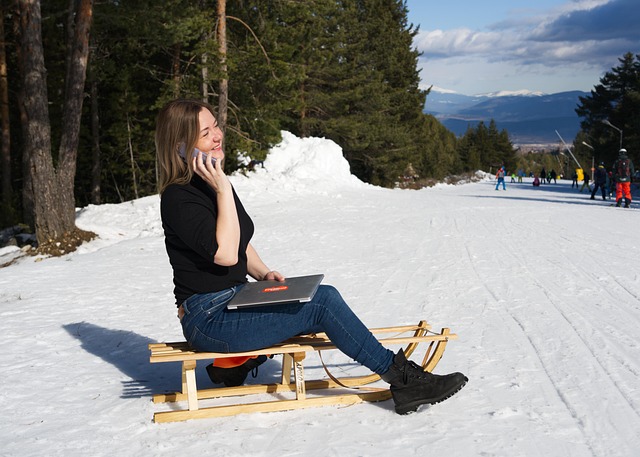
In the U.S. alone, a broader measure of remote work counts any home-working day, rather than only people who usually work from home. As a result, roughly 32.5% of employed people are doing some work at home in 2024, according to the Bureau of Labor Statistics. In addition, this figure rises to 50% among workers with a bachelor’s degree or higher. On the nomadic side of location-independent work, MBO Partners’ research shows digital nomads in the U.S grew from 7.3 million in 2019 to 18.5 million in 2025. These statistics alone show the true scale of location-independent work’s growth and how the trends continue to indicate future growth.
Countries Leading the Rise
As of 2025, around 69 countries offer a dedicated digital nomad visa or remote-worker residency pathway. Leading this rise are Spain, the UAE, Portugal, and Montenegro, which rank among the top destinations of the Global Digital Nomad Report. The measurement is determined by evaluating visa programs based on cost, tax treatment, and overall quality of life.
Generally, these visas share a common structure: proof of remote income above a certain threshold, health insurance coverage, and a time-limited stay. The income thresholds can vary somewhat, with most European programs setting the minimum at €2,000-€3,000 per month. In contrast, a small number of higher-cost destinations, including Japan and South Korea, set the minimum at €57,000-€60,000 annually.
Some countries go beyond a standard Visa. For example, Barbados’ Welcome Stamp lets remote workers live on the island for up to a year. Germany’s freelancer-focused visa requires applicants to work in specific professional fields and pay taxes locally. Thus, given the many differences of working as a digital nomad, the term “digital nomad” can be classified as an umbrella term due to its many categories.
Why Is Location-Independent Work Growing?
Better remote technology
Video conferencing, cloud-based collaboration tools, and reliable internet access are now available in many more places than before. A decade ago, this would have seemed impossible for individuals, but it has now become even easier to work remotely.
More flexible policies from employers
OECD research has discovered that companies with a formal teleworking policy have more telework and report far better employee experience and trust. This has resulted in employers being more willing to let staff work from abroad.
Younger workers drive the demand for remote work.
Gen Z and Millennials together make up around three-quarters of the digital nomad population. Once these generations make up a majority of the workforce, the demand for location-independent work will likely continue to rise.
Countries see an economic benefit.
Governments worldwide see an economic upside in digital nomad visas. These upsides stem from the fact that remote workers are not competing for local jobs, which creates an incentive to expand visa eligibility.
The Challenge of Getting Healthcare Access
According to the ILO and Eurofound, higher rates of mobile workers, a group closest to digital nomads, report poorer health and well-being outcomes compared with workers who telework from a fixed location. This is due to the absence of a doctor and limited awareness of local healthcare plans.

This makes acquiring a proper insurance plan a requirement for working abroad. As a result, most digital nomad visa programs already require proof of health insurance as a condition of the visa. In the majority of the 69 countries currently in these programs, coverage is a legal requirement for working abroad.
Before choosing a plan, consider whether the coverage works for every country in your itinerary. Also, you need to know whether it covers routine care in addition to emergencies and meets the specific insurance requirements of the visa you’re applying for.
Why this Matters
Location-independent work has grown from a niche lifestyle into a trend that involves millions of people. Numerous governments now compete to attract these individuals, and the growth shows absolutely no sign of slowing. Yet, along with this, there are also practical questions about health insurance and coverage plans.
At Expat Financial, a division of TFG Global Insurance Ltd, we believe the excitement of location-independent work should not come at the expense of proper coverage in a country with no safety guides or protection. Health insurance requirements can vary significantly by destination and visa type, so confirming exactly what a plan covers before committing to a country or visa application is worth it.
For more clarity on global healthcare options and coverage considerations, call +1-604-628-0426. It is really easy to get a quote online or contact us to discuss your unique requirements.
Written & Edited by Michael Tompkins, a writer focused on the evolving world of location-independent work. His work explores how technology, changing workplace cultures, and global mobility are reshaping where and how people work, as well as the opportunities and practical considerations of building a career beyond traditional office environments.