How Biologic Drugs Impact Global Health Insurance Premiums
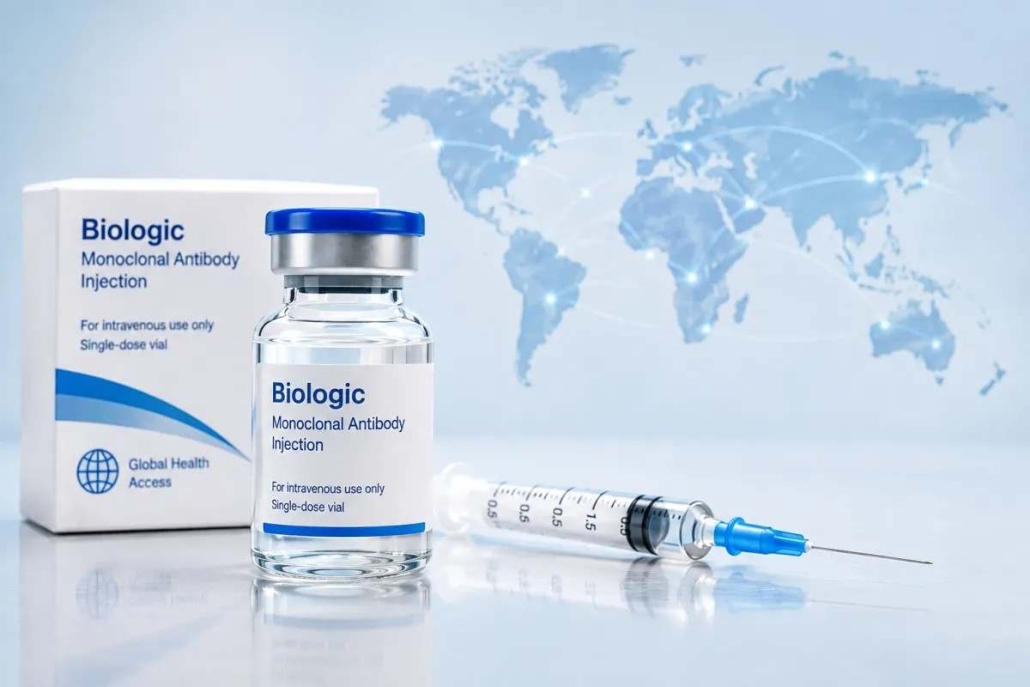
Expatriates and global mobility managers often ask why medical insurance premiums are increasing. One significant reason for high medical cost inflation and claims is the development of biologic medications. In fact, according to the American Journal of Managed Care, biosimilar drugs are projected to reach $40-$49 billion in annual sales by 2027, more than twice the $18.1 billion recorded in 2024. This rapid growth highlights the increasing significance of biologic drugs in the pharmaceutical market.
This growth has been driven by the immense spending by pharmacies committed to these drugs, despite them accounting for only a small share of prescriptions written. Nevertheless, beyond routine hospital visits and doctor consultations, sources indicate that almost all health insurance plans cover biologics.
When expats and global HR managers renew an international health insurance plan, it is vital to understand why these drugs cost what they do. Additionally, it is important to know what insurers are doing about it, as biologic drugs have become increasingly prominent in recent years.
What are Biologic Drugs?
Biologic drugs, often called biologics or specialty drugs by researchers and doctors, differ from conventional drugs in that they are manufactured directly from living cells rather than synthesized chemically, as with traditional pharmaceuticals. They are often used to treat complex, chronic conditions such as Crohn’s disease, rheumatoid arthritis, psoriasis, multiple sclerosis, and numerous cancers. Examples include Humira, Skyrizi, Dupixent, and newer cell-based cancer treatments such as CAR-T therapies.

Because they are grown rather than synthesized via standard chemistry, biologics are much more expensive to develop, produce, and store than conventional drugs. This difficulty in production helps explain why biologics are so costly, a cost higher than that of historically priced insurance plans around the world.
Once a biologic’s patent protection expires, manufacturers can create a biosimilar. Biosimilars are practically identical versions of biologic drugs and are heavily approved by regulators such as the FDA. Generally, biosimilars are considered the closest equivalent to a reference drug and usually cost less than biologics.
Note that these biologic medications should be seen as a significant positive for healthcare worldwide. Anything that contributes to the health and well-being of humanity is an amazing advancement that should be applauded.
How Much Biologic Drugs are Driving Up Healthcare Costs
According to Pharmaceutical Strategies Group’s 2026 trend report, gross specialty drug costs reached over $1548 per health plan member in 2025. Specialty drug trend held at 10.8% on a gross basis, and PSG projects gross per-member costs will climb another 32% by around 2028.
The report also found that the share of plan members using at least one specialty drug has risen from around 4.4% to 5.5 over the span of two years. This is evidence that the use of these drugs is the dominant force behind the overall increase.
Moreover, the U.S. National Institutes of Health’s public archive of biomedical research shows that specialty pharmaceuticals are the fastest-growing segment of the pharmaceutical market, with individual treatment costs reaching up to $350,000 per patient annually. This spending rose by more than 15% over five years, much faster than the overall drug cost trend.
Even so, this trend isn’t some new phenomenon. The RAND Corporation reports that biologics accounted for around 70% of the total growth in US prescription drug spending between 2010 and 2015. Though these figures may be outdated, the number has increased even a decade later. W
The global biologics market is projected to grow from $450 billion today to $850 billion over the next 10 years. This is almost double the value of the biologics industry today. This figure shows how much more spending on these therapies health insurers must absorb over the same period.
A Counterfactual – How Biologic Drugs May Help Drive Down Medical Costs for Expat Insurers
The growing availability of biosimilar medications could help international and expatriate health insurers control the rapidly rising cost of biologic drugs. Biosimilars are highly similar to existing approved biologics in safety, effectiveness and potency, but increased competition can significantly reduce treatment costs. Interestingly, the RAND research estimated that biosimilars could generate approximately US$38.4 billion in U.S. healthcare savings over five years, representing about 5.9% of projected biologic spending, with substantially greater savings possible if competition and adoption increase.
It is encouraging to see how advances in medicines may help lower medical claims for insurers, but this may take many years.
Which Drugs and Conditions Are Behind The Rise in Costs?
A relatively small list of high-cost biologics accounts for a disproportionate share of overall spending. As noted by Drug Topics, these drugs are already set to surpass 60% of total pharmacy spend in 2026, even though they account for less than 5% of prescriptions written. Furthermore, Biosimilar use has skyrocketed to over 36.7% as buyers increasingly require patients to switch from branded options, which are commonly the lower-cost alternatives.

The average cost of chronic inflammatory conditions such as Crohn’s disease and rheumatoid arthritis ranges from $70,000 to $120,000 per year. What’s more, Oncology treatments in this category can run way higher. Cell and gene therapies, a newer and more expensive subset of drugs, saw prices climb 6.2% annually between 2020 and 2023, a trend that has continued to date, according to the Healthcare Financial Management Association.
What’s Driving Biologic Drug Costs Higher?
Expensive manufacturing
These drugs are mainly produced from living cells under tightly controlled conditions, unlike small-molecule drugs, which can be chemically synthesized. This production process alone makes them dramatically more expensive to bring to market and manufacture at scale.
Patent exclusivity and slow biosimilar competition
Many have maintained patent protection for years after launch, delaying lower-cost competition. Even after a patent expires, the biosimilar approval and adoption process has long been slower than that for generic drugs.
Expanding indications
Once approved, these drugs are often approved for additional conditions over time. This opens a window for the overall pool of eligible patients and increases total spending, even though per-patient pricing remains stagnant.
Rising Chronic disease prevalence
Autoimmune conditions, inflammatory diseases, and types of cancers are the primary conditions that these drugs commonly treat, and continue to rise in prevalence around the world.
Employer and insurer premium pass-through
Employer healthcare premiums are predicted to rise by 6.5% around 2026, the highest increase since 2010. That’s driven by both price and utilization factors that were tied heavily to specialty drug spend, as cited by the Healthcare Financial Management Association.
Slow regulatory turnaround on new biosimilars
When a biosimilar is brought to market, it has historically required extensive clinical testing beyond that required for generic small-molecule drugs. As noted by the FDA, its approval count reached only roughly 90 by the end of 2025, 10 years after the first biosimilarity pathway launched.
Will Biosimilars Bring Global Insurance Costs Down?
Biosimilars can help bring these prices down. Sources report that Biosimilars have created savings for consumers. According to Cardinal Health’s 2026 Biosimilars Report, biosimilars have generated more than $56 billion in US healthcare savings since the first was launched in 2015.
The FDA’s move to streamline biosimilar development protocols also cut testing costs for developers by up to $20 million per product. This should ultimately help biosimilars reach the market more quickly while keeping prices reasonable.
However, as noted above, these positive implications are not uniform. Analysts also warn of a so-called “biosimilar void.” Up to $232 billion in potential savings could be missed over the next ten years if competition fails to keep up with the amount of biologics losing patent protection. Thus, the next few years could either bring costs down or continue to follow past trends.
How Expats Can Protect Themselves from Rising Biologic Drug Costs
If you’re prescribed a biologic, always ask your physician whether a biosimilar equivalent exists before starting treatment. The biosimilar share of the specialty market climbed from 22.6% to 56.3% between 2023 and 2025, so a lower-cost option is more likely to exist than most preemptive assumptions suggest.
Moreover, ensure you ask your insurer whether your plan requires biosimilar substitution once a biosimilar has been approved. Usually, payers default to these alternatives, so this lets you know whether you’re getting the low-cost option or paying for an unnecessarily expensive drug.
You should also check whether your coverage area affects what’s available or reimbursed for a given biologic. This is because cost and access can vary by country. You should also verify your plan’s prior authorization and renewal requirements. Doing so can help avoid denied claims or treatment issues.
Why this Matters for Expats
The costs of Biologic Drugs are not simply out-of-the-ordinary spikes. They show a trend with no sign of slowing down. Specialty drug spending has increased each year, and even with biosimilars delivering billions in savings, analysts warn that more will be left on the table if competition for these drugs does not increase.
At Expat Financial, a division of TFG Global Insurance Ltd, we believe healthcare planning abroad should be viewed through the lens of both cost and coverage quality. Coverage for these therapies varies significantly across insurers and plans, so it’s worth confirming exactly how a plan handles them before you need them.
If you want more clarity on global healthcare options and coverage considerations, call +1-604-628-0426 or email [email protected]. You can get a quote online or contact us to discuss your unique requirements. If your company employs expatriates or sends people abroad for long-term assignments, we hope you found this article helpful and will contact our firm to discuss your requirements and existing global benefits plans.
Written and Edited by Michael Tompkins – An avid reader and writer on financial matters and a student at the Ivy School of Business at Western University in Canada.